
0 A.D.
Behind the
battlefield.
A striking battlefield screenshot is not a strategy. In 0 A.D., the more useful question is what the army costs the settlement while it is away: which workers have stopped gathering, which route is exposed, and which investment can no longer be made. The free historical strategy game rewards looking beyond the impressive buildings to the relationships between people, resources, information and space.
Wildfire Games currently offers Release 28, Boiorix, announced February 18, 2026. It is the first release without the Alpha label. That is a useful reason to revisit the project, not a claim that it launched today or that every older guide has become reliable. This article is an analysis of the developer’s public documentation and official imagery, not a hands-on performance review or a tested competitive build order.
Start with the version, not the most confident tutorial
The project’s documentation has accumulated over many years. Its game-manual index explicitly warns that the older material may be outdated. A search result can therefore be official and still describe a previous version. The correct response is not to discard every old explanation, but to separate the underlying system from numbers, interface labels and exceptions that can change.
For example, a description of gathering resources helps explain what an economy does. A precise price for an advancement, a claimed bonus for a unit or a keyboard shortcut needs a different standard of verification. Treat the older manual as a conceptual map and the installed release’s information as the operational reference. A guide that never identifies its version leaves the reader unable to resolve a disagreement.
This distinction also makes community advice more useful. Instead of asking whether a strategy is simply good, identify its assumptions: the release, civilization, map, population settings, opponent and modifications. Two apparently contradictory recommendations can address different circumstances. Recording those conditions is more valuable than copying a sequence whose conditions have disappeared.

What the end of Alpha changes—and what it does not
Release 28 adds the Germans, a semi-nomadic faction with Supply Wagons and Wagon Encampments, and changes the presentation of basic economic units to male and female Civilians. The developer says that naming and visual change does not itself alter their statistics. The release also changes several balance rules, so its new presentation and its mechanical adjustments should not be confused.
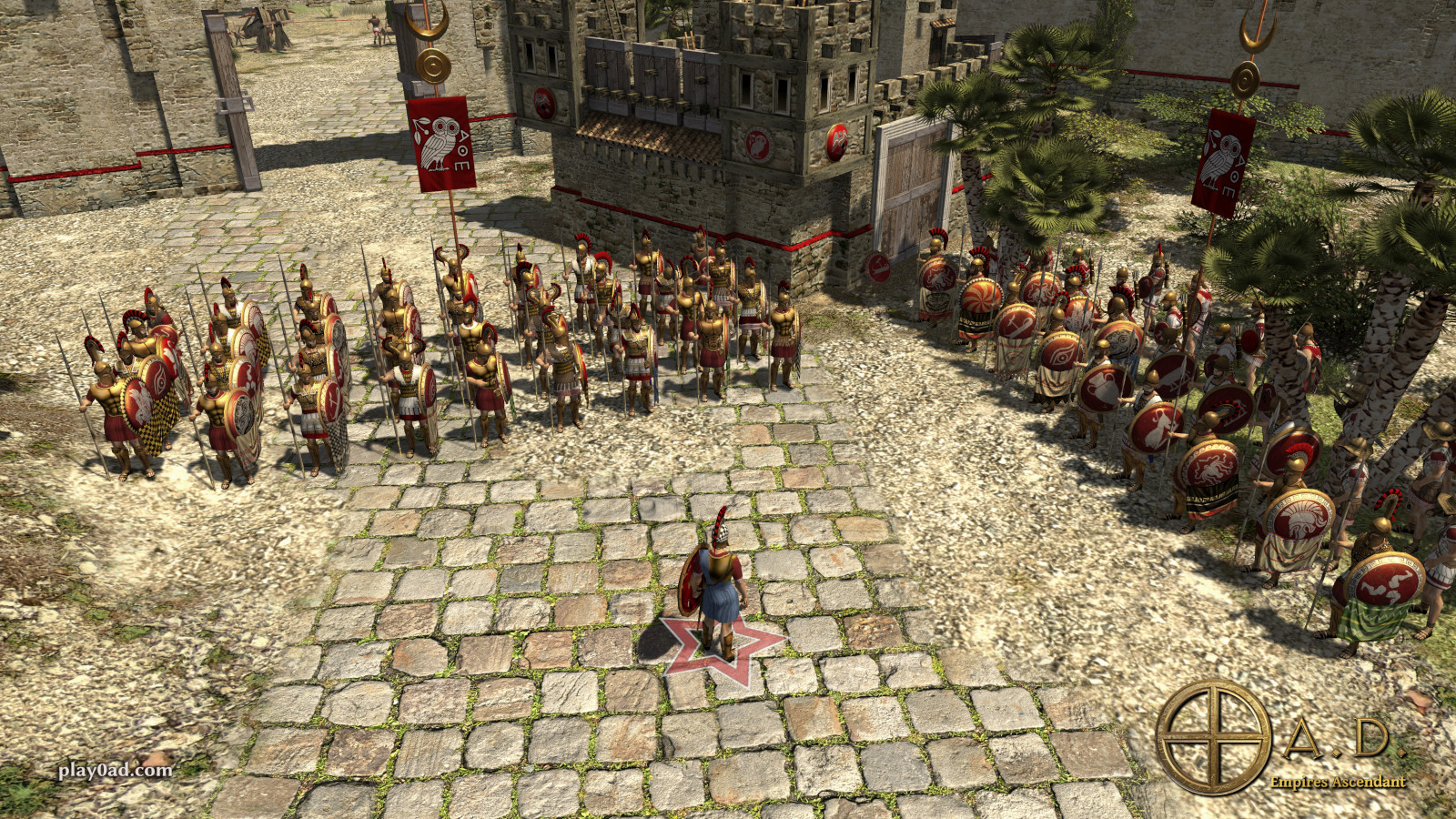
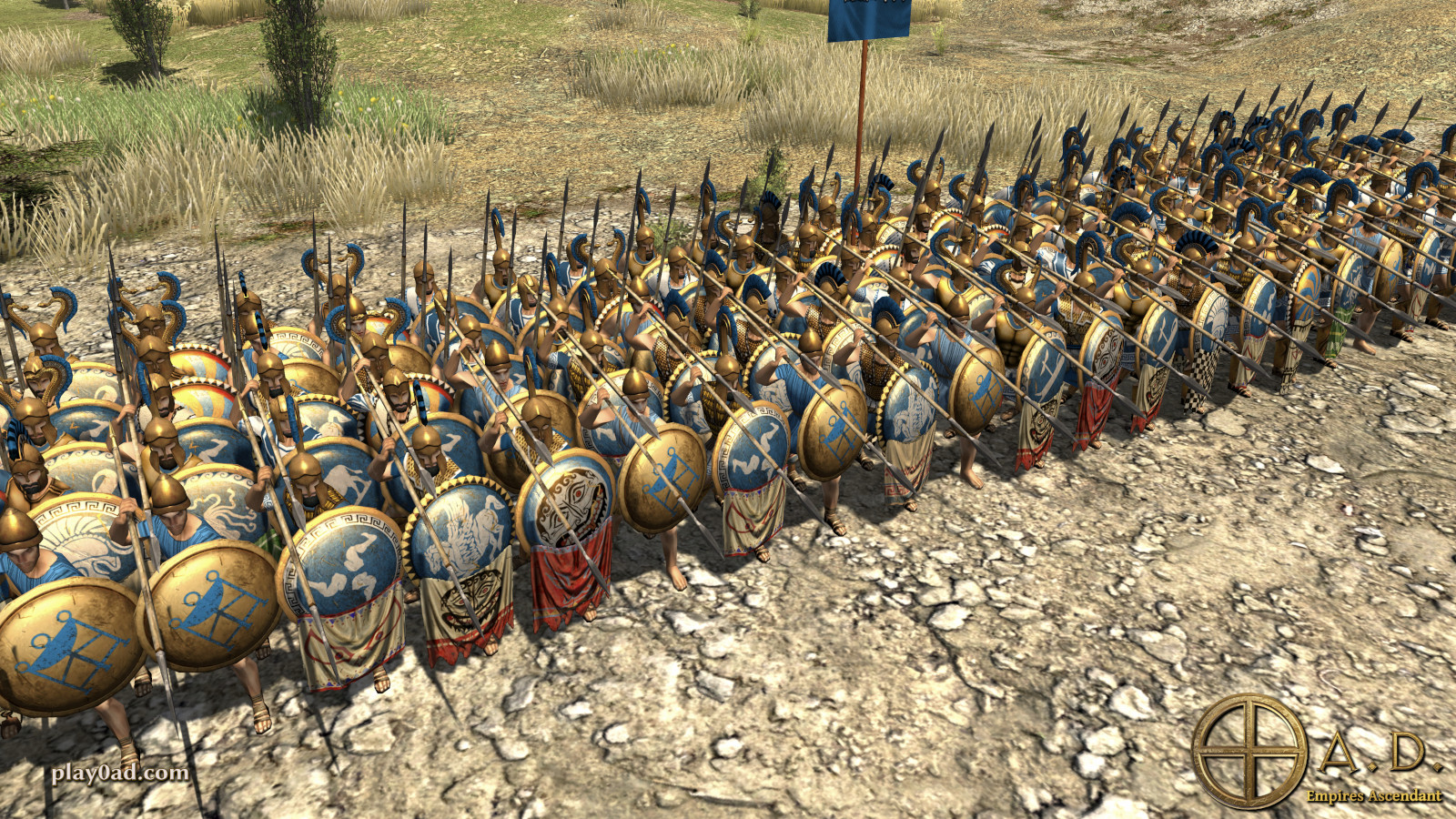
The distinction matters when evaluating screenshots. A different-looking worker is not evidence of a different gathering rate. A dramatic building is not evidence that it is available at the start. An army arranged for a promotional image is not a demonstration of an optimal formation. Visual information can identify what a game depicts without proving how a particular match will unfold.
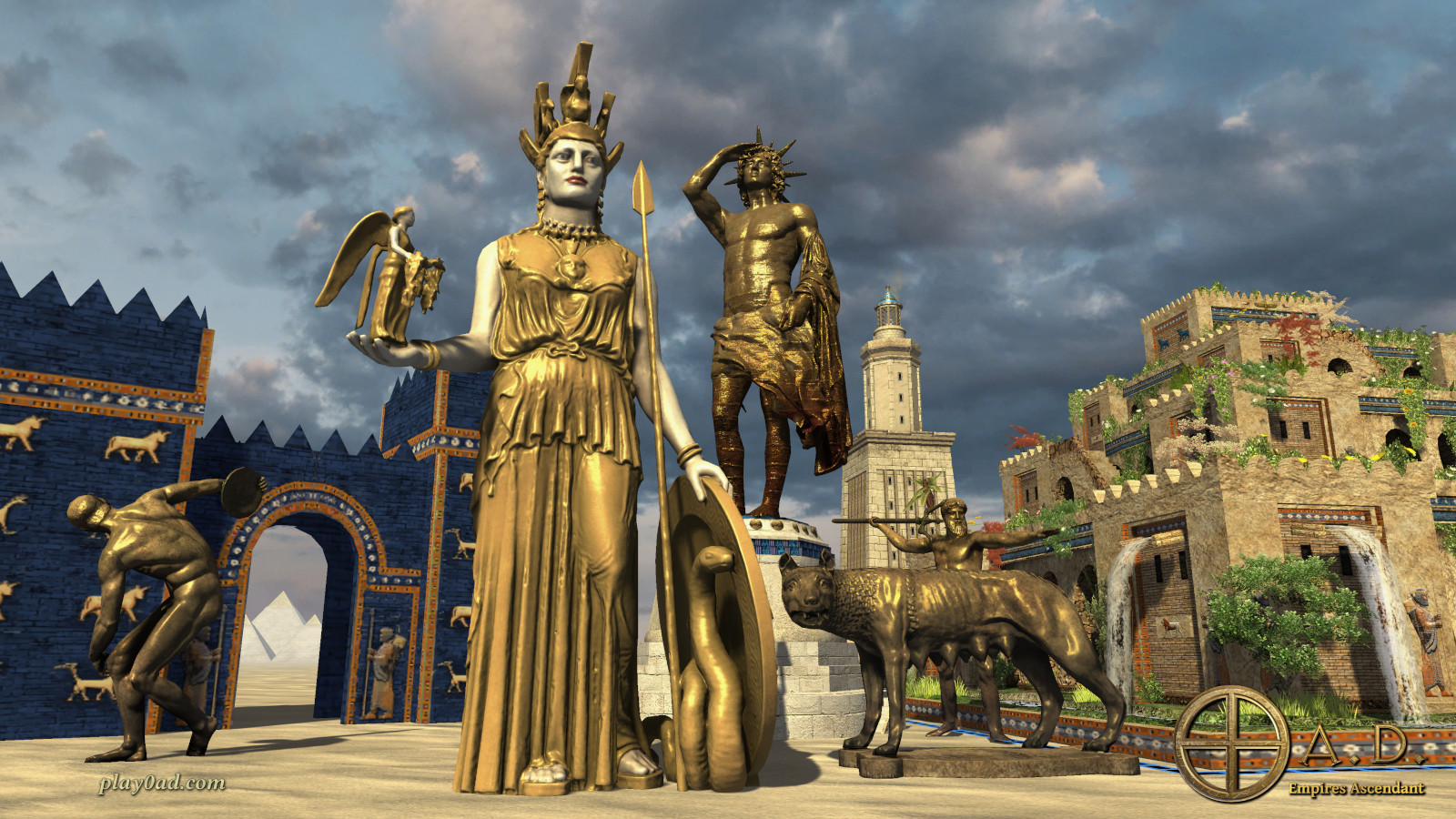
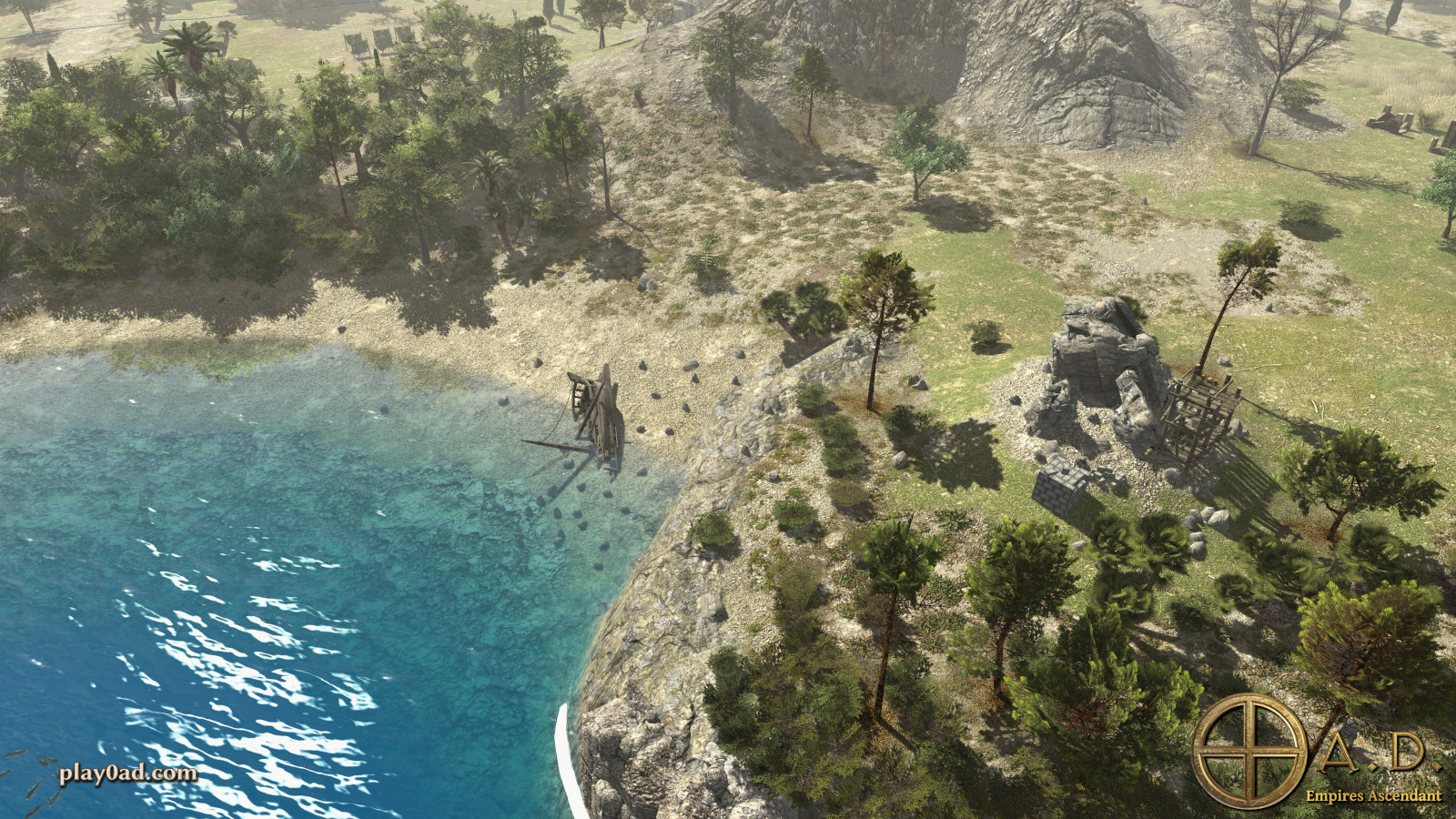
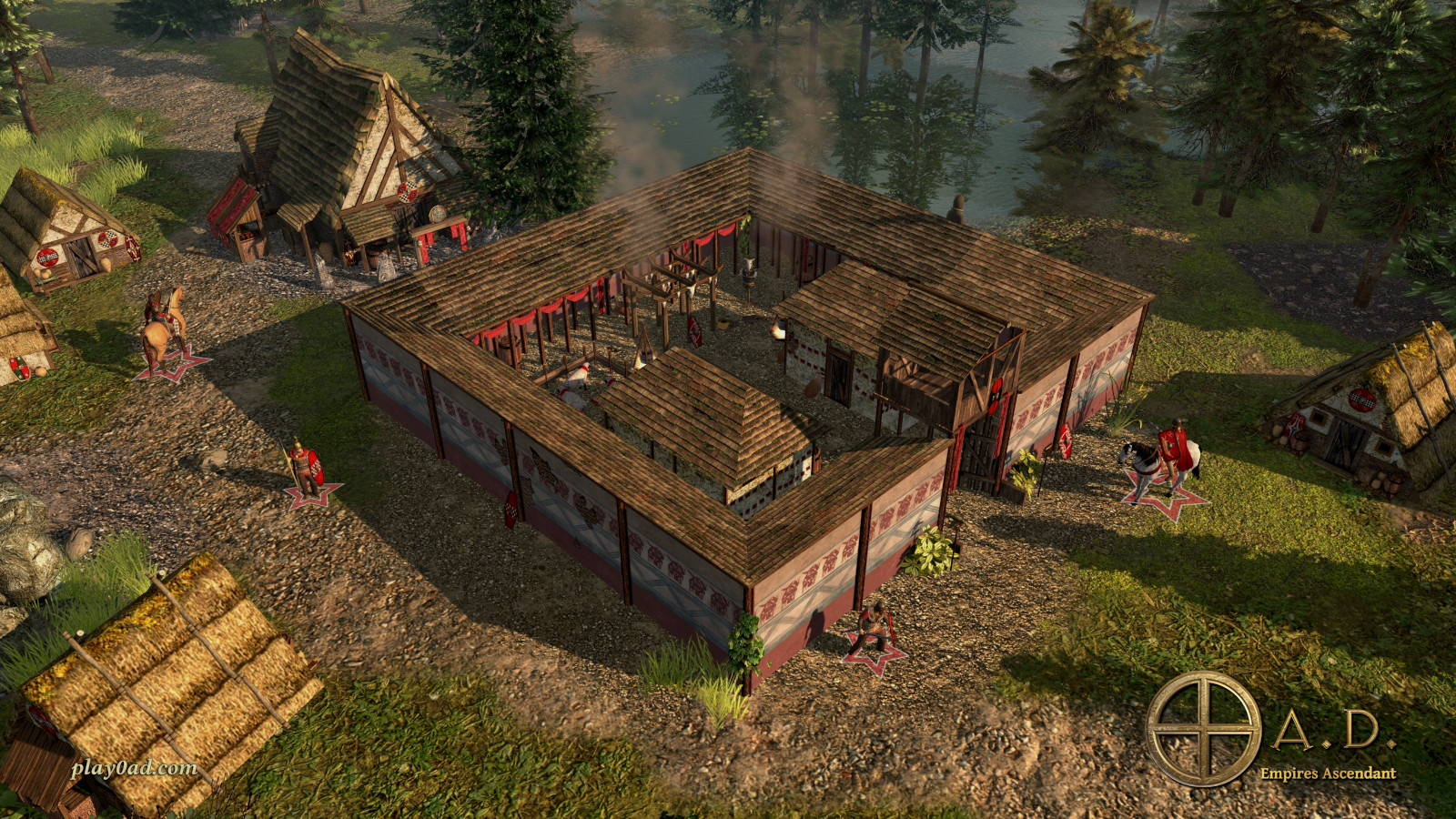
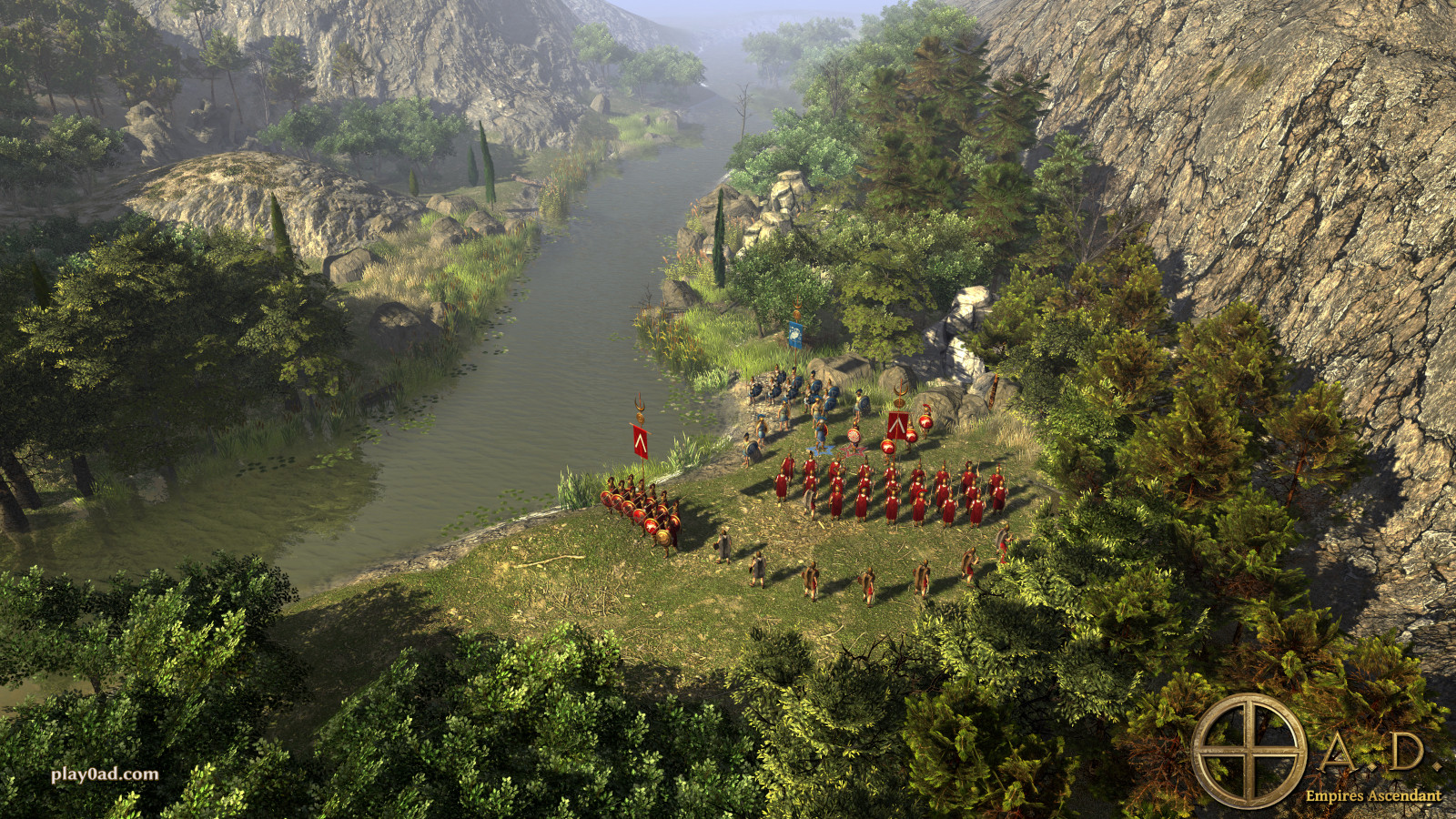
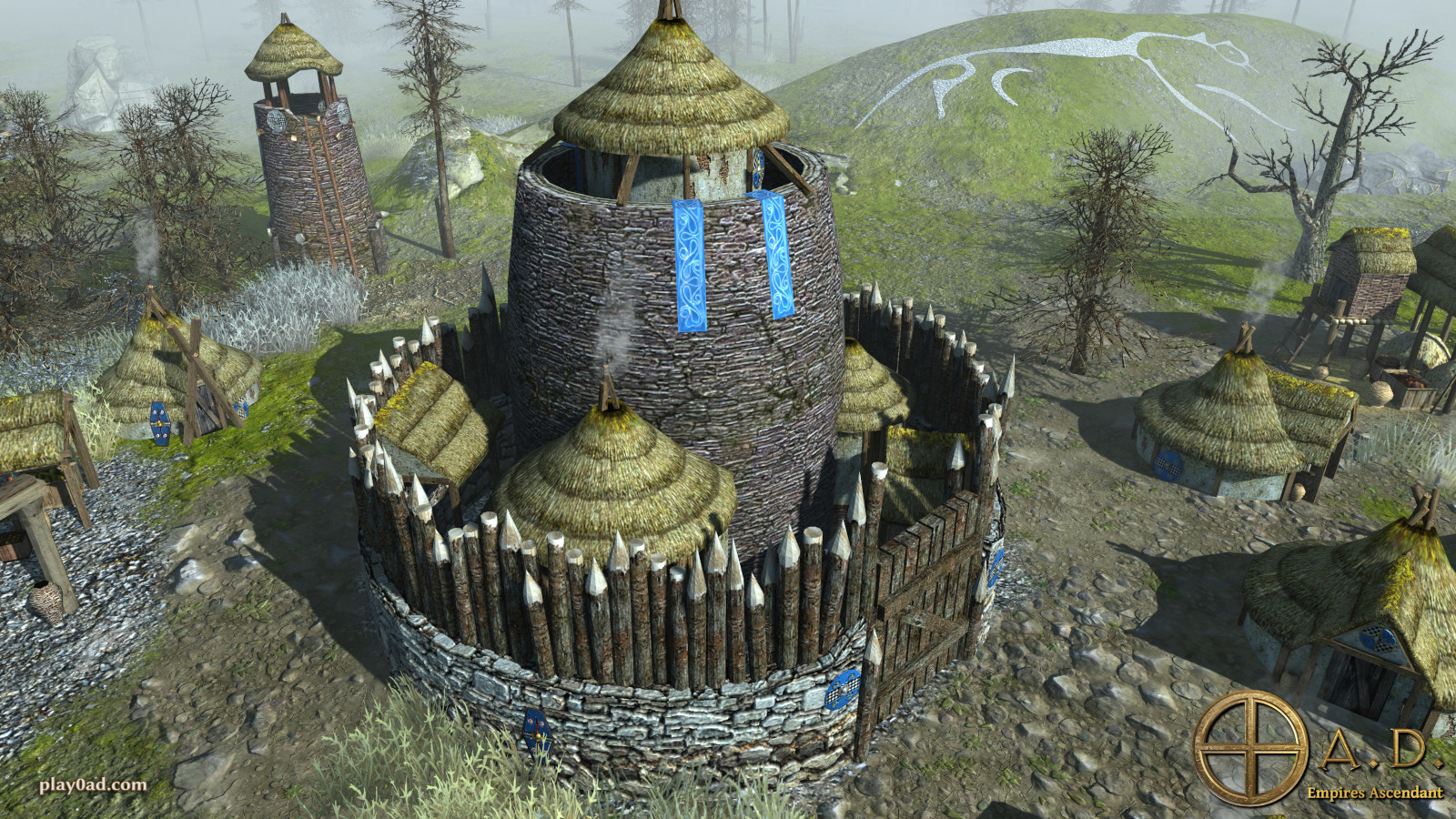
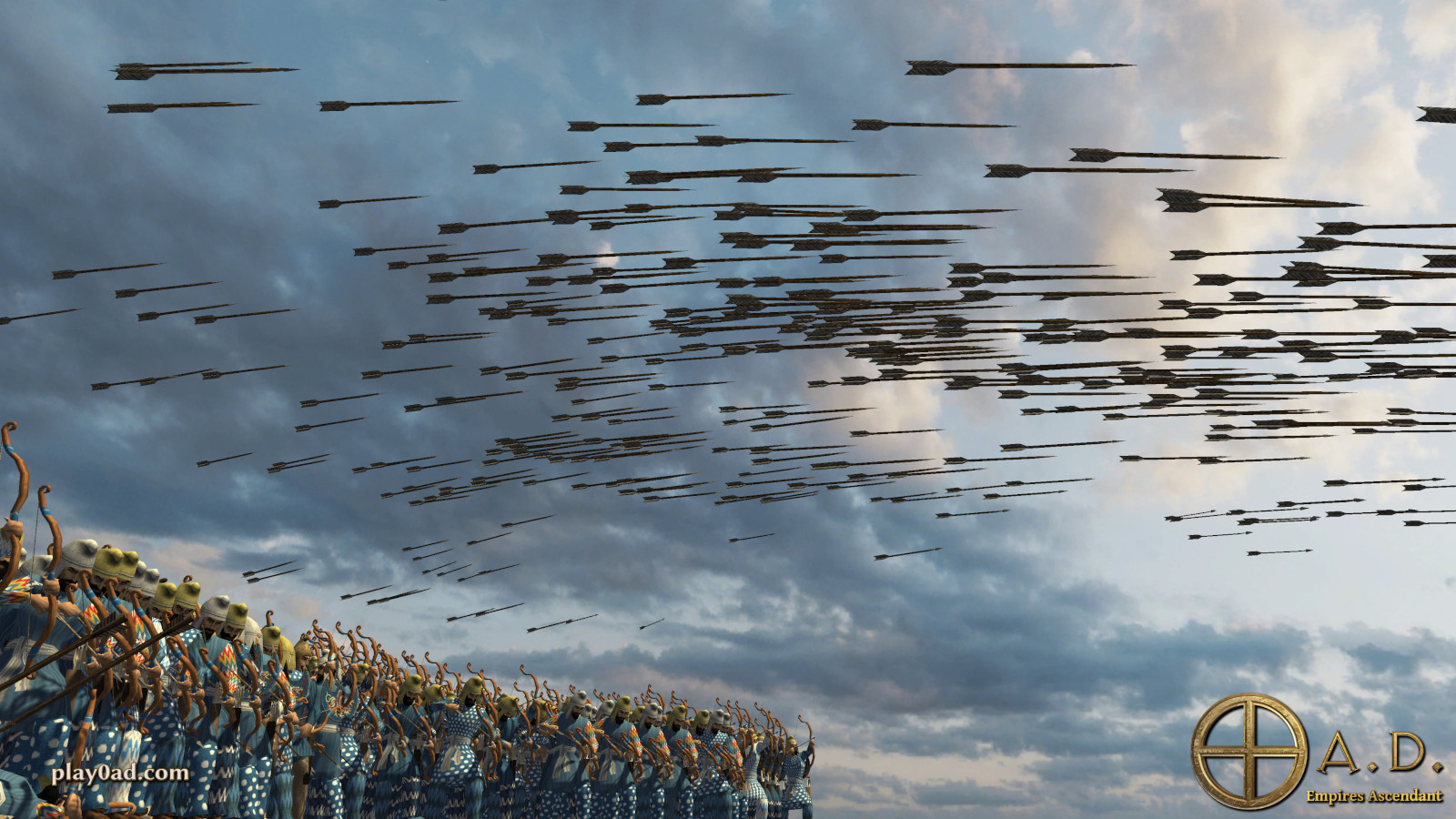
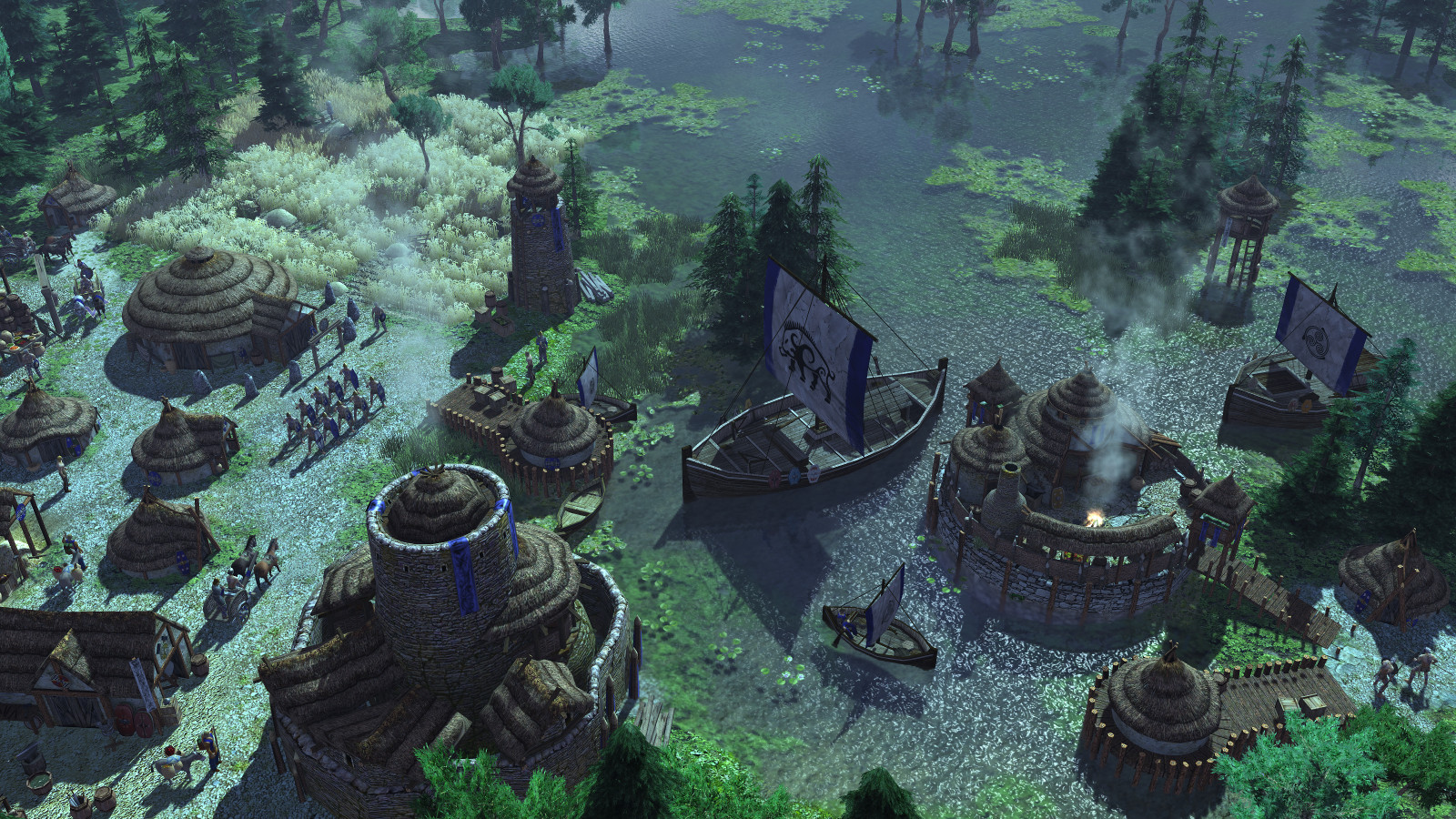
The pictures here are official gallery images, including older material. They illustrate architecture, terrain, forces and the game’s visual language; they are not represented as captures from a new Release 28 play session. Where an image displays an older version mark, that mark remains visible. A current article can responsibly use archival game imagery when the distinction is explicit.
One soldier can represent two different costs
The developer’s features page identifies citizen-soldiers as a central distinction: some fighting units can also gather and build. It also describes experience as a tradeoff, with combat advancement improving military strength while reducing civilian effectiveness. This is a more consequential idea than the simple instruction to recruit a larger army.
Consider a hypothetical force pulled away from work to defend a threatened approach. The immediate benefit is protection. The less visible cost is the work those units are no longer doing. Even if no unit is lost, the economy may produce less during the interruption. Counting survivors alone would miss that cost; counting only the resources spent on recruitment would miss it too.
This is not a formula for avoiding combat. A defense can preserve far more production than it interrupts. It is a framework for asking better questions afterward: did the response arrive in time, did it protect the important activity, and did the workers return to productive tasks? The same visible army can have a very different economic effect depending on when and why it moves.

A resource deposit is not yet usable income
The older gathering chapter distinguishes food, wood, stone and metal, and explains that gathered materials must be delivered to an appropriate dropsite. Its enduring analytical lesson is that collection includes travel. A cluster of workers beside a large resource supply is not, by itself, a complete picture of productive capacity.
Imagine two otherwise comparable work areas. One has a short, protected path to delivery; the other requires a long journey through a vulnerable corridor. Without inventing a numerical gathering advantage, it is possible to identify the relevant variables: working time, walking time, interruptions and safety. A screenshot showing the size of the forest reveals only one of them.
For a new player, that suggests an observation exercise rather than a universal construction order. Follow a worker through an entire cycle. Notice where it goes, what interrupts it and whether its destination still makes sense after the nearby resource changes. The goal is to understand the flow before expanding it. Adding more workers to a badly arranged process can enlarge the problem rather than solve it.

Production needs capacity as well as resources
The training chapter describes recruitment through buildings, a population limit and rally points that direct newly trained units. These systems connect a resource stockpile to the units that actually appear and begin working. The presence of enough materials does not mean every other prerequisite has been satisfied.
A useful way to diagnose a stalled plan is to trace it backward. Is the intended building producing? Is capacity available? Are new units arriving where they are needed? Are they being assigned a meaningful task? This is more precise than reacting to every pause by gathering more of whatever resource happens to look low.
Rally points illustrate how a small decision can have repeated consequences. A destination that was sensible earlier may no longer fit an expanded settlement or a changed threat. Repeatedly producing units into the wrong place creates a management burden that can be mistaken for insufficient production. The broader lesson is that orders persist beyond the moment they are issued; their usefulness does not necessarily persist with them.

The map contains remembered information, not only current information

Territory makes expansion a connected decision
The older territory guide describes borders tied to structures and explains that changes in control can affect buildings. Its listed exceptions and specific behavior should be checked against the current civilization and release, rather than treated as a universal placement rule. Even at the conceptual level, it explains why expansion is more than finding an empty patch of land.
An outlying position can shorten access to a resource while increasing the area that needs attention. A structure can be valuable because of the network it supports, not merely its individual function. Losing a connection may matter more than the visual size of the lost building suggests. These are questions about relationships across the settlement rather than a contest to occupy the most ground.
The practical comparison is between what a new position enables and what it obliges the player to maintain. Does it support the next resource need? Can units reach it? Does it depend on information that is already old? A large border on a map is not a substitute for answers to those questions. Expansion is useful when it strengthens a workable system.

An upgrade is a commitment with a timing problem
The technology chapter describes progression through Village, Town and City phases and research that unlocks additional possibilities. Its old numerical costs are not reproduced here as current instructions. The important distinction is between paying for access to something and having the means to exploit that access afterward.
A hypothetical player who spends heavily to unlock an option but cannot then produce or support it has purchased potential rather than immediate strength. Another player who delays indefinitely may preserve a comfortable present while surrendering future choices. The decision depends on the intended follow-through, not on treating advancement as an achievement detached from the rest of the economy.
Before committing resources, name the purpose in ordinary language: a particular capability, a planned response or a more sustainable production arrangement. Then ask what remains available during the transition. This makes an upgrade decision testable. If the planned benefit never materializes, the player has a specific sequence to examine instead of concluding that the game merely needed more clicking.
Combat is a comparison of capabilities, not silhouettes
The combat guide separates infantry, cavalry, siege weapons and ships, and distinguishes close-range from ranged attacks. It also discusses different damage and armor categories. Its older examples are not a substitute for current unit information, but the framework explains why apparent size or visual grandeur is a poor ranking system.
A ranged force needs an opportunity to use its range. A fast force needs a useful destination. A unit suited to one target may be an expensive answer to another. These statements do not establish a universal counter chart; they identify the relationship that a counter chart is trying to summarize. Terrain, positioning and the task assigned to a force affect whether its nominal advantages can be used.
When reviewing an engagement, separate composition from execution. Was the force intended for the target it met? Could it reach or maintain the relevant distance? Did it arrive together? Did attention remain on a fight after the strategic objective had changed? Those questions help distinguish a recruitment problem from a movement or information problem without pretending that a screenshot supplies a match result.

A market and a route solve different shortages
The trade chapter distinguishes recurring movement between markets or docks from bartering one resource for another. Its description of changing exchange rates is another reason not to transplant an old fixed-price example into a present match. The analytical distinction is between creating an ongoing flow and making an immediate conversion.
An immediate conversion may solve a particular bottleneck, but it does not automatically repair the reason that bottleneck keeps returning. A recurring route may promise a continuing benefit while creating exposure along the route. The two choices operate over different time horizons. Treating either as a free replacement for planning hides the cost that has merely moved elsewhere.
For a beginner, the useful comparison is concrete: what is needed now, what is likely to be needed repeatedly, and what activity will support it? That question is more informative than calling trade either essential or unnecessary in the abstract. As with workers and armies, the visible object matters because of the process it participates in.

Historical design is an interpretation, not a time machine
Free software still has conditions, and requirements still matter
The official download page lists supported platforms and system requirements, including 4 GB of disk space. Its Windows listing identifies versions 10 and 11; its macOS listing distinguishes Intel and Apple-silicon requirements. These are compatibility statements from the developer, not a benchmark promising a particular frame rate on every machine that meets a minimum.
A crowded simulation can ask different things of a computer than a quiet opening scene. Resolution, the size of a match and background activity can complicate a comparison. Without a controlled test, an article should not turn a minimum specification into a performance claim. Checking the actual platform entry before downloading is more useful than relying on an old tutorial’s hardware assumptions.
The project’s participation material also distinguishes a freely available game from work without ownership or attribution. It invites contributions and explains that screenshots and other derivative art remain subject to the relevant share-alike terms. The images accompanying this article retain their source and license links. Open development makes investigation possible; it does not remove the need to identify where material came from.
The first useful lesson is how to examine a decision
A productive first session does not need to prove mastery. Choose one question that can be observed clearly: why a work area stopped delivering, whether a force returned to its former task, how a route changed the information available, or what an upgrade actually enabled. Keep the scenario simple enough that the answer is not buried under several simultaneous changes.
Then describe the result without embellishment. A successful defense does not prove that a unit is always best. A shortage in one match does not establish that a civilization is weak. A screenshot of an attractive city does not prove that its economy is efficient. The value of the exercise is a more accurate account of cause and consequence.
That is the most useful way to approach 0 A.D. after Alpha: as a system to understand, not merely a collection of ancient armies to admire. Its visual richness draws attention to the battlefield. The decisions that give that battlefield meaning often begin with the worker, the route, the information and the resources that are not visible in the promotional image.

For a contrasting economic design, read our Widelands guide to trade and transport. Its workers follow connected production networks rather than the direct unit orders discussed here.


Comments
Post a Comment