Mini Mart Survivors Launches on Steam: The Night Shift Is Now a Bullet Heaven
Now hiring

Mini Mart Survivors turns a convenience-store job into a debt-fueled roguelite, with six branches and a free demo to test its combat.
A convenience store is an unusually good setting for a survival game. The lights stay on after the rest of the street goes dark. People keep arriving. The worker cannot simply leave. Mini Mart Survivors, released on Steam on November 9, makes that familiar situation literal: the customers become monsters, the merchandise becomes ammunition, and the paycheck is a reason to return to a dangerous job. The hook is instantly legible, but the more interesting question is what happens after the joke lands. Can a game about surviving another shift make the decision to clock in again feel different from starting another ordinary roguelite run?
This is launch coverage and design analysis based on the live store, Geek Haus's published development account, official gameplay information and supplied screenshots. It is not a hands-on review. The distinction matters for a small game launching into a crowded genre: a promising premise, readable screenshots and a low price can establish a reason to investigate, but they cannot establish how well the controls, encounter balance or long-term progression actually work.
The launch is real; the verdict is still open
The Steam listing now marks the game as released, rather than merely forthcoming. At the time checked, its US listing showed a $6.99 regular price and a 15 percent introductory discount to $5.94, ending November 23. Geek Haus is both developer and publisher. The listing covers Windows and macOS; this is not a console announcement. Prices, tax treatment and regional offers can differ, so the meaningful number for a buyer remains the amount displayed in their own storefront.

A familiar genre gets an unfamiliar workplace
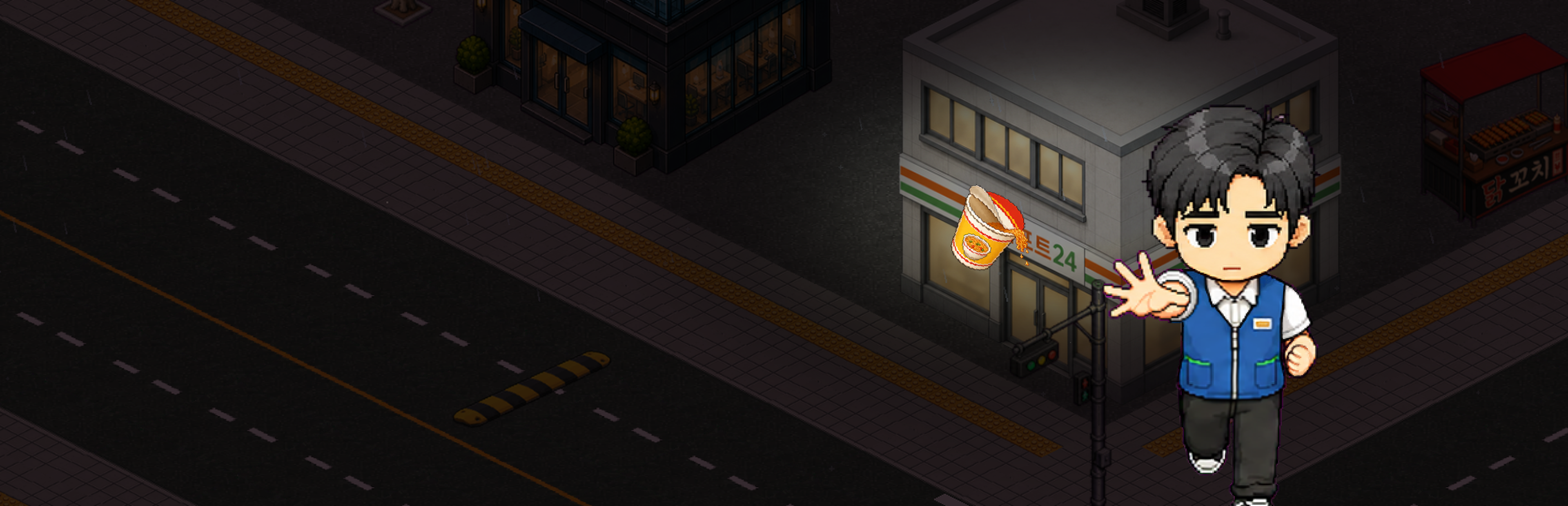
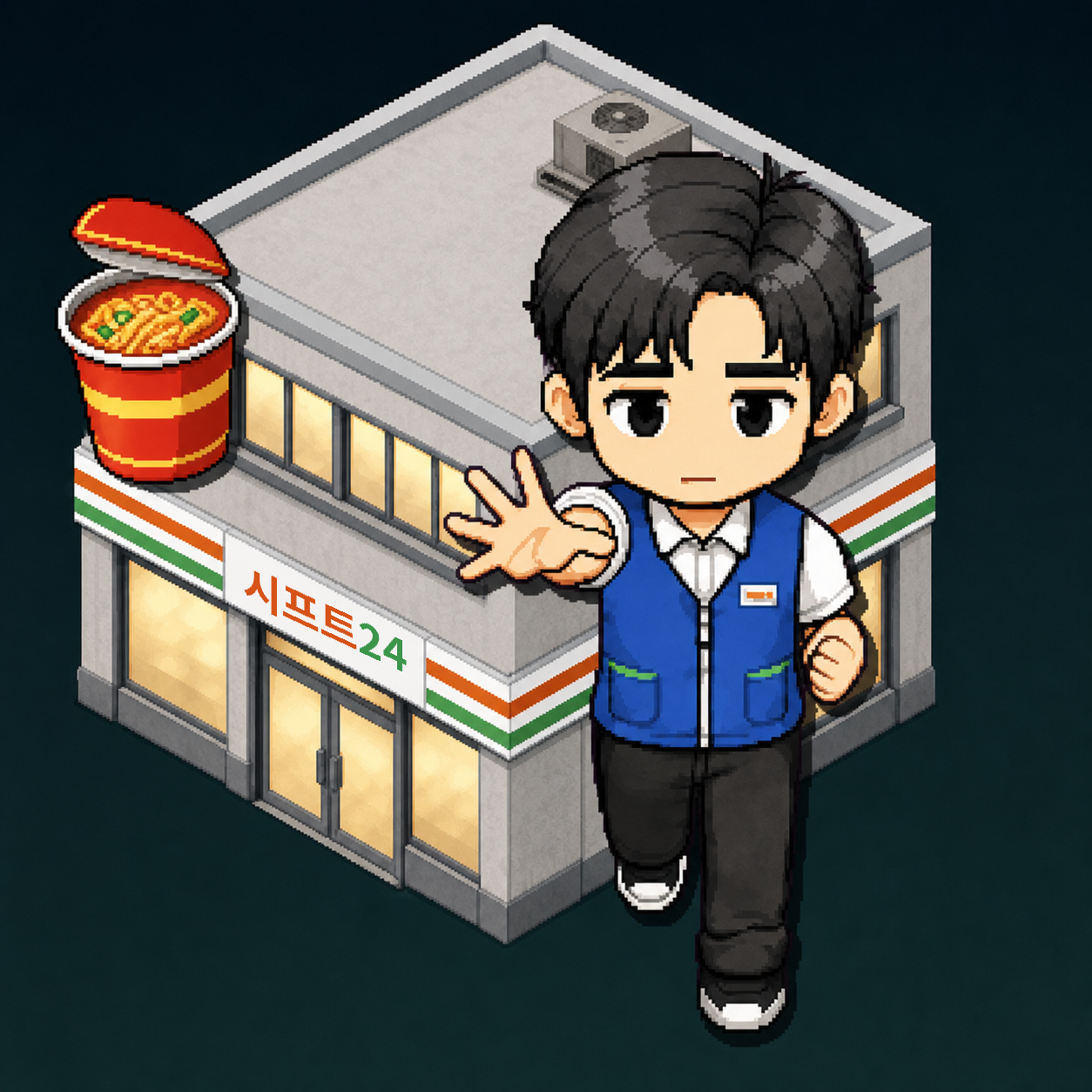
The survivors-like formula puts pressure on movement and build choices while enemies accumulate around the player. Here, the wrapper is not a medieval adventurer or a cosmic warrior. It is a clerk trying to survive work. That change of scale gives ordinary objects unusual comic weight. A packet of food is recognizable before it becomes an attack effect. A checkout job is understandable before the first supernatural customer arrives. The player does not need several pages of fantasy terminology to grasp the basic situation.
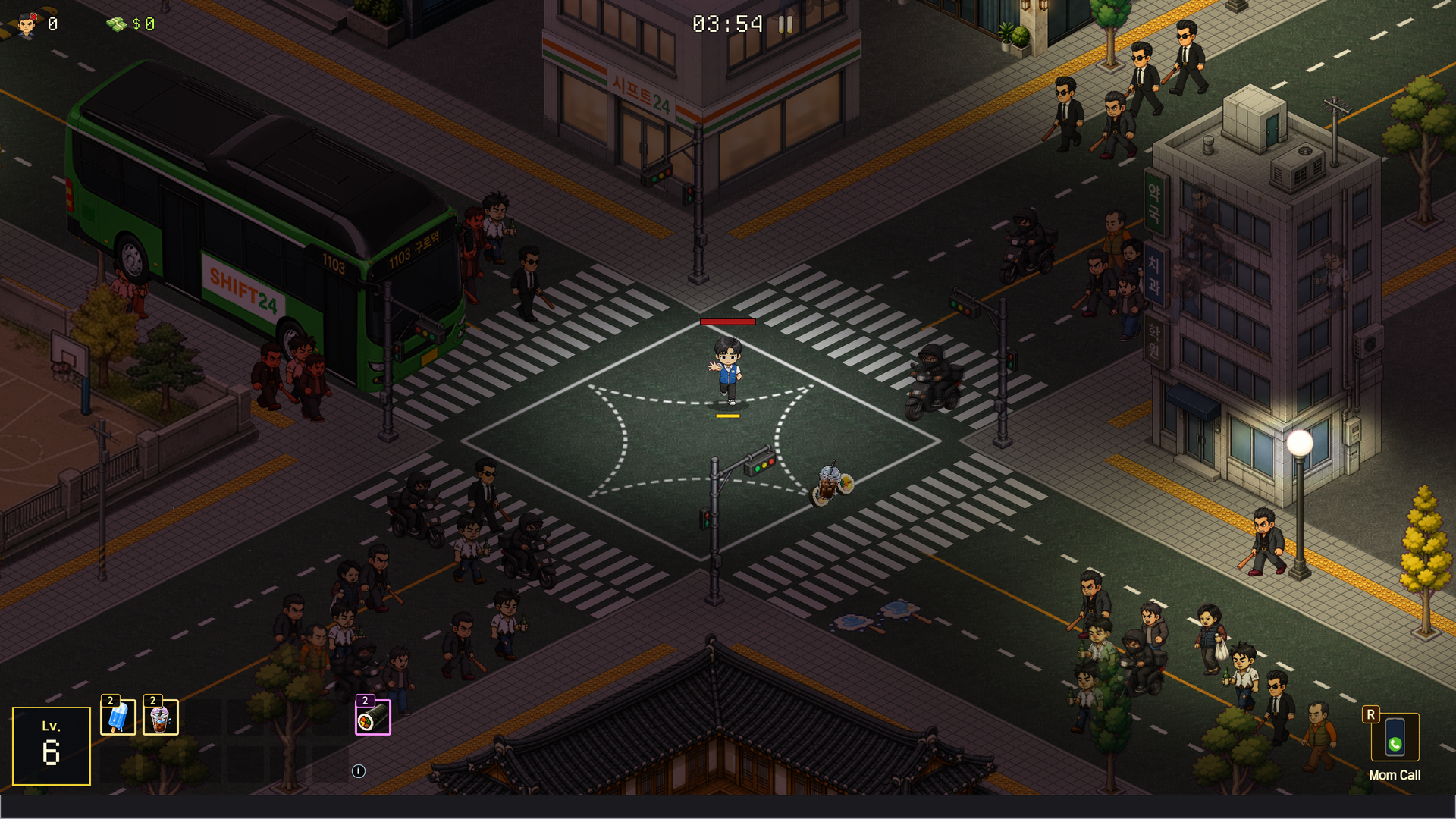
There is a design advantage to that immediate recognition. In a busy action game, the player has little spare attention to decode an entirely unfamiliar world. A street corner, a bus and a lit storefront give the eye something stable to read while the combat becomes more chaotic. Familiarity can make the strange parts stand out. It can also become a liability if every later encounter merely repeats the same gag, which is why the interactions between weapons, enemy movement and geography matter more than the joke on the cover.
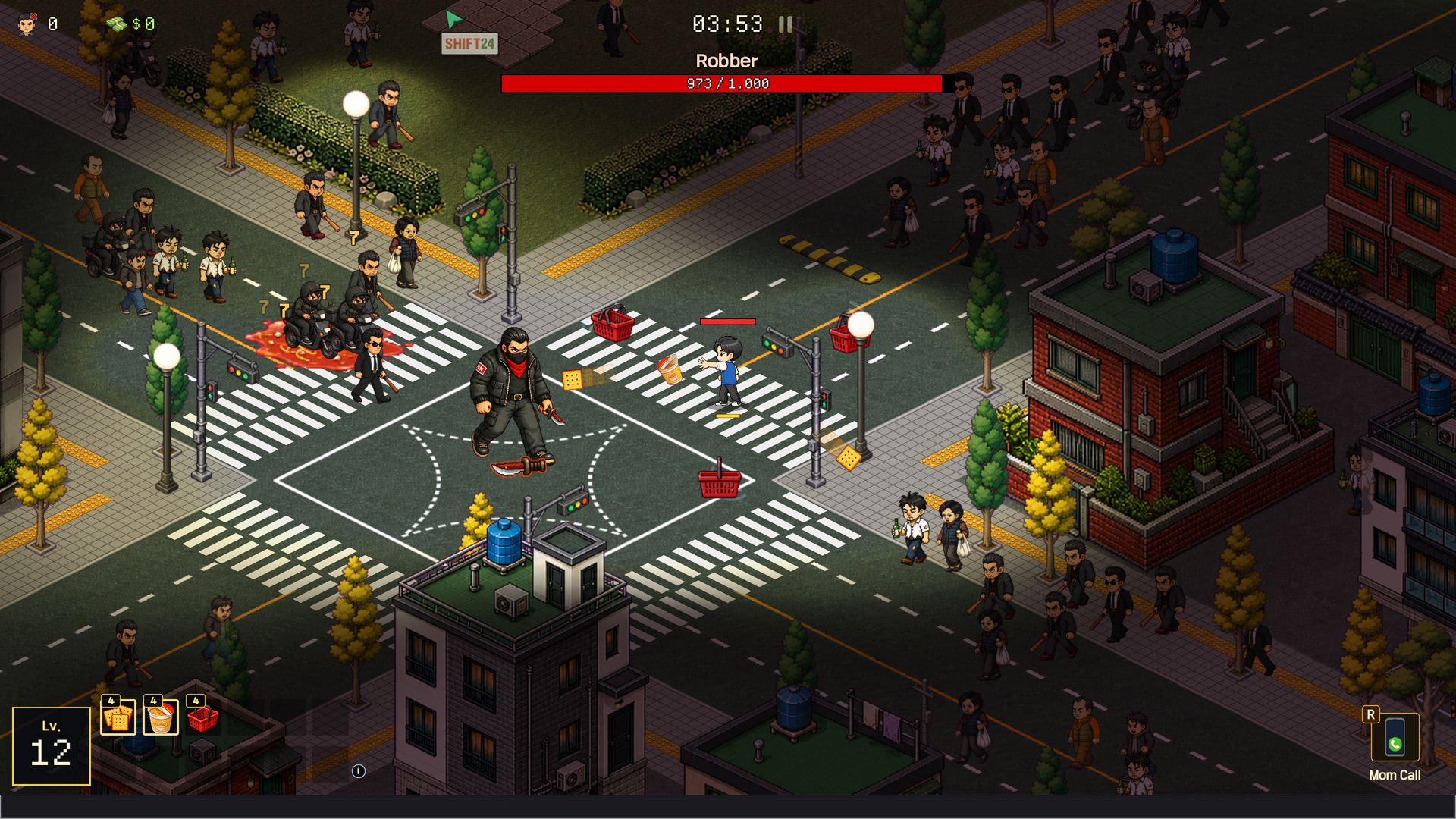
The official screenshots make the contrast visible. The Seoul scenes use road markings and intersections as a clear ground plane, while crowds and attack effects compete for attention above them. The everyday street is not presented as a photorealistic simulation; it is a stylized space for action. That distinction should shape expectations. This is a supernatural workplace comedy, not an attempt to reproduce the experience of working in an actual Korean convenience store.

Shelves become a build system
The official gameplay description gives the merchandise a mechanical role. Level-ups offer three choices, selections can be rerolled, and combining a fully developed weapon with a matching item produces an evolution. The interesting part is not simply that noodles or coffee can hurt a monster. It is whether those choices create different relationships between the clerk and the crowd: different safe distances, different escape paths and different reasons to move toward or away from a threatening group.
A good build decision changes the next minute of play. If every attractive option only makes the same attack larger, progression can feel spectacular without becoming more thoughtful. If one option improves the ability to clear a route while another rewards holding a position, the decision becomes situational. These are useful standards for judging Mini Mart Survivors, not claims that every one of those exact effects exists in its release. The screenshots show varied attacks; only playing can establish how much meaningful choice sits behind them.
Rerolls introduce a second question: how much uncertainty should a player accept before trying to repair a build? That decision is interesting when several imperfect combinations remain viable. It becomes less interesting when one essential pairing makes every alternative feel like a mistake. A demo session can help a reader distinguish between discovering a preference and discovering a compulsory recipe. The former encourages experimentation; the latter risks turning the next run into another attempt to receive the correct cards.

Ten minutes is an escalation point, not a stopwatch promise
The game describes its final boss as arriving after ten minutes of combat. The official FAQ explicitly allows the full run to last longer once the fight itself is included. That is a small clarification with practical consequences. A player squeezing a run into a break should not read the premise as a guarantee that the game will return them to a menu exactly ten minutes after starting.
As a design structure, a known escalation point gives an attempt a shape. Early choices have a destination, rather than feeding an endless sequence of indistinguishable waves. The player can ask whether a risky upgrade is likely to pay off before the major encounter arrives. A run that fails close to the threshold can also suggest a clearer next experiment than one that ends at an arbitrary moment. But a countdown alone does not solve pacing: the minutes before the boss must still contain decisions worth making.

The paycheck asks a different question from the level-up screen
Between attempts, the game places wages between two competing uses: preparing for future combat and reducing the clerk's debt. That arrangement is more distinctive than the familiar choice among three combat upgrades. One decision concerns the immediate attempt. The other concerns why the character remains trapped in the cycle of attempts at all. In principle, improving the ability to survive and getting closer to leaving the job need not be the same goal.
That tension is where the premise could earn its dark humor. A safer next shift might require money that could otherwise move the clerk toward freedom. Conversely, a payment toward an eventual exit may leave fewer resources available for preparation. The exact balance and costs have not been independently tested here. The point is the structure: a progression system can tell a story through competing incentives, rather than asking the player to stop playing and listen to an explanation of what the story means.
The developer's published account connects the concept to seeing a lone worker in a brightly lit store late at night. It also describes debt and limited job prospects as the pressure behind the clerk's decision to stay. That is the studio's explanation of its fiction, not evidence about real workers or a claim to represent every person's experience. The game can borrow a recognizable anxiety without becoming a documentary. Its success as satire will depend on how the consequences feel, not only on whether the premise contains a serious subject.

A mystery placed around the action
Geek Haus says the narrative is available through material such as office records and possessions left by the previous clerk, rather than forcing all of it into the combat loop. The attraction of that approach is optional attention. Someone interested mainly in surviving can keep the action moving, while another player can read the workplace as evidence of something larger. The same location can function as an arena and as a setting with a history.
Optional storytelling has a trade-off. If the clues are too disconnected from the player's decisions, the mystery can feel like a second game attached to the first. If every clue is mandatory, the promised freedom disappears. A useful test is whether a discovery changes how the player interprets an ordinary detail already seen: a job, an account, a missing employee, a manager's incomplete explanation. Recontextualizing familiar objects is often more effective than continually adding new exposition.
The published premise links the ending to repayments, discoveries and a final choice. That describes the inputs to the narrative, not a verified map of every ending or an assertion about how dramatically they differ. This article deliberately does not invent an optimal route. Part of the reason to investigate the full game would be to learn whether the clerk's choices have consequences that feel connected to the time spent making them.

Six branches need more than six backdrops
The full version lists Seoul, Texas, Sapporo, Copenhagen, Dubai and Hong Kong. The demo stays with Seoul. A geographic itinerary gives the game an easy way to vary its scenery, but scenery alone is not the same as variety. For an action game, the more important change is what a player must notice and how they must respond. New colors and buildings can refresh the image while leaving the decision-making almost untouched.
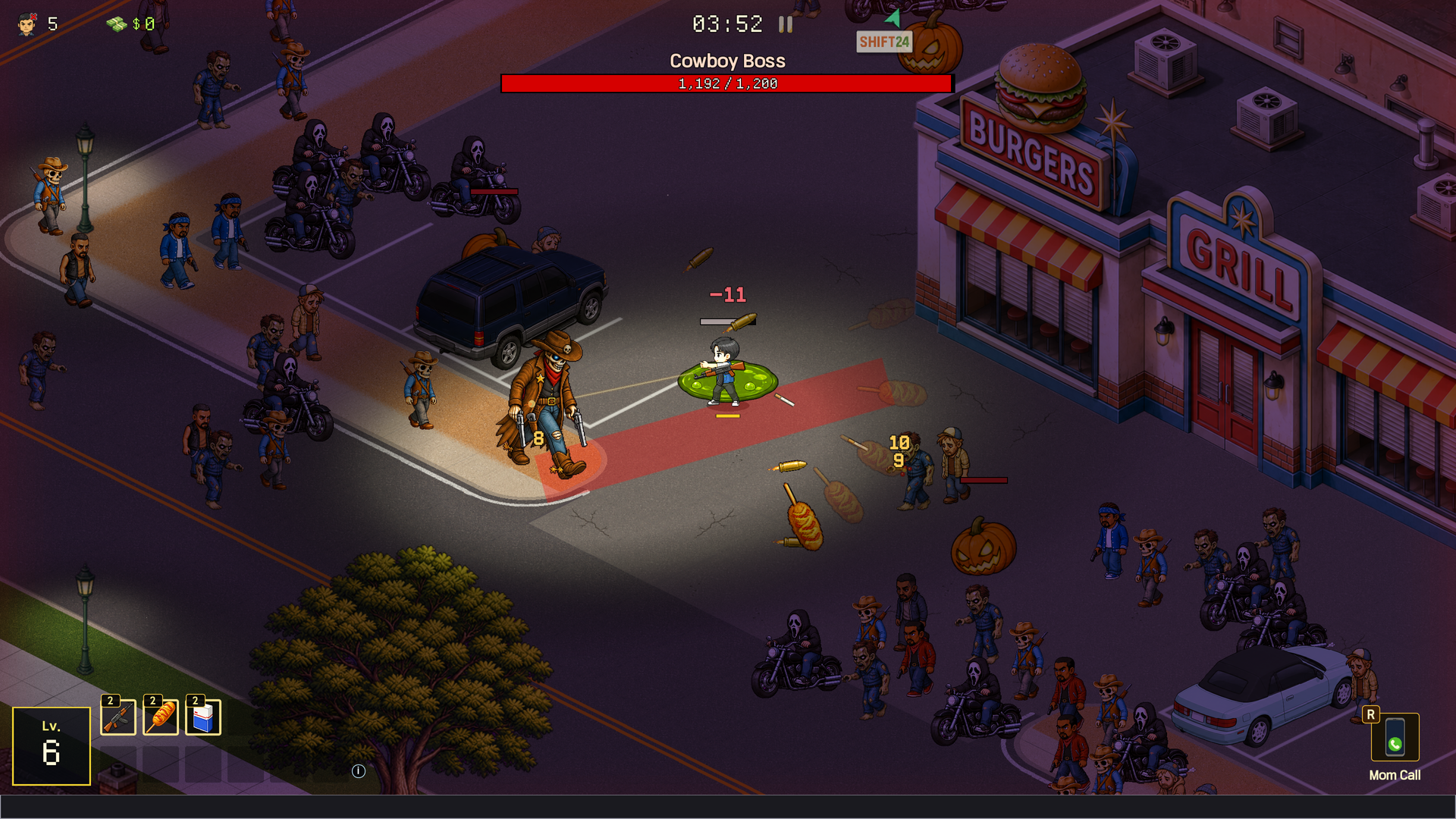
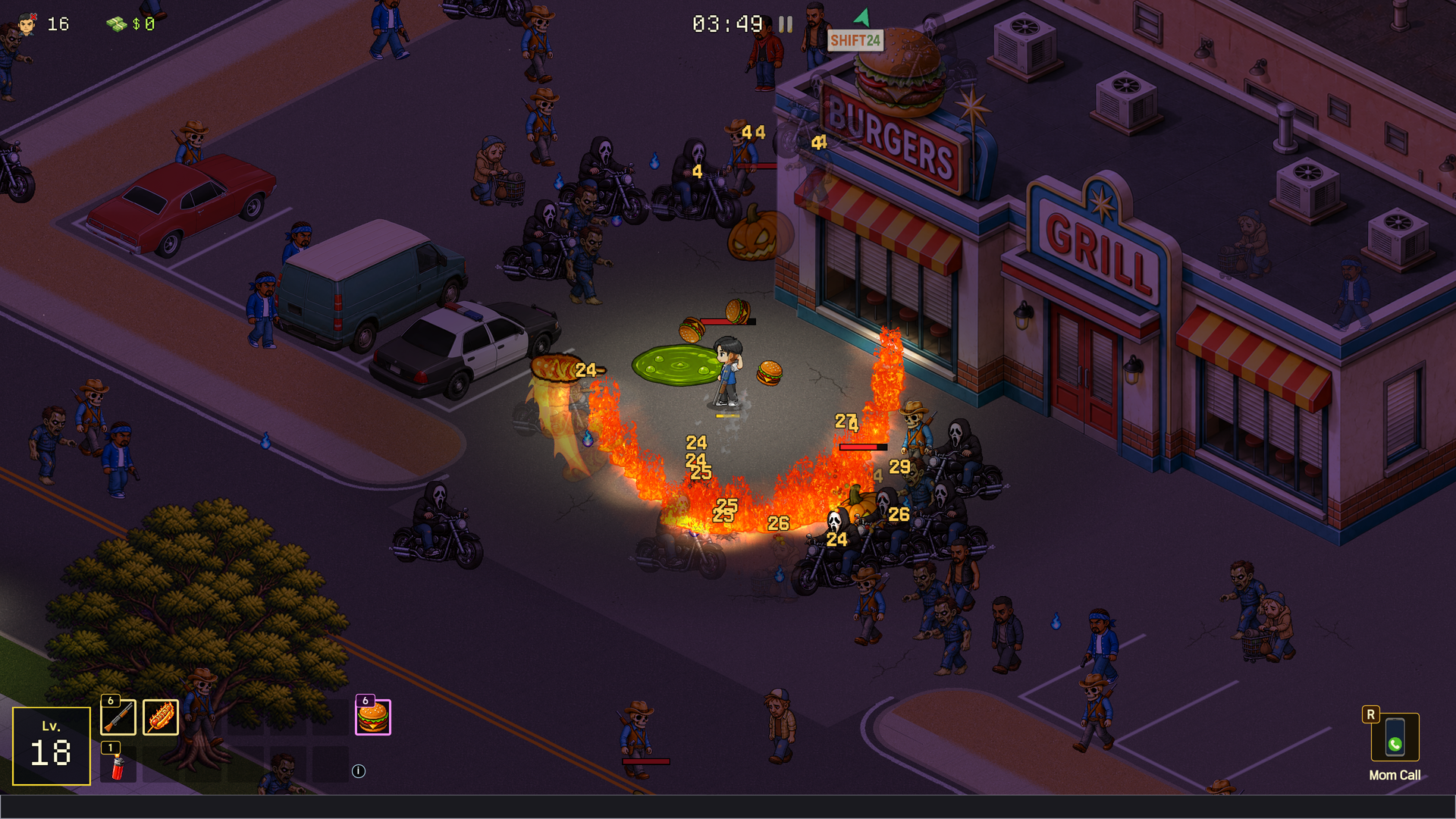
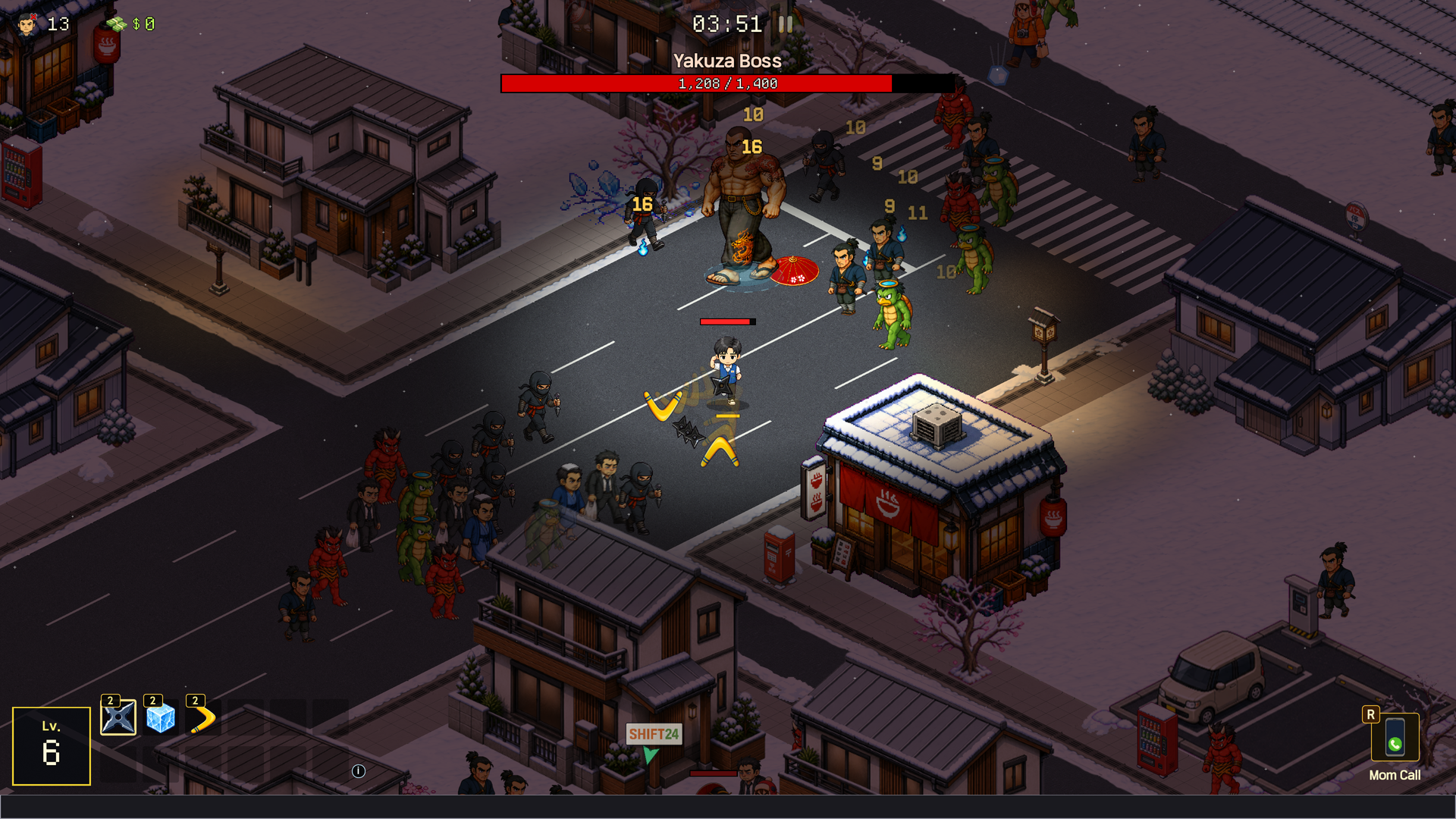
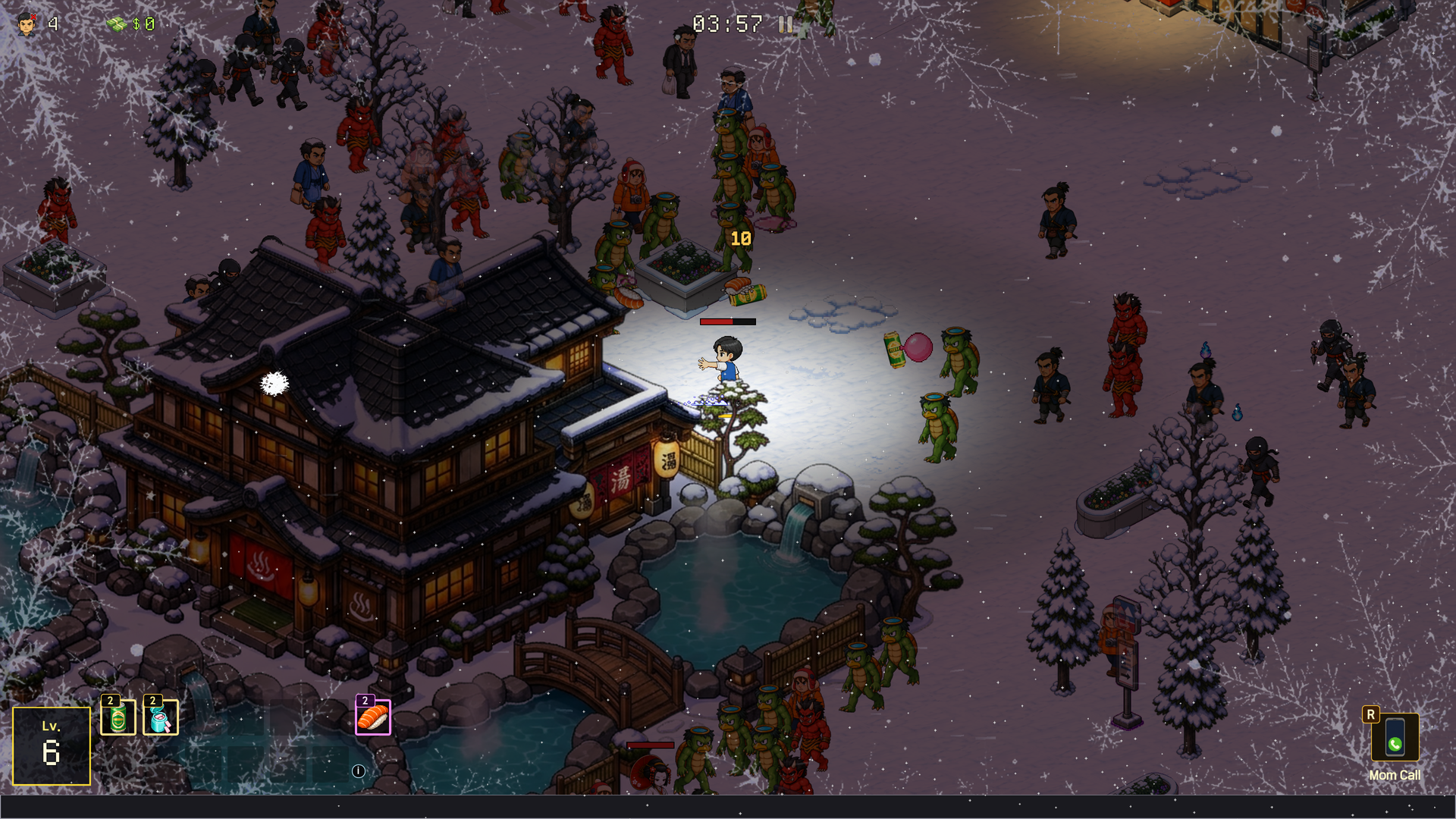
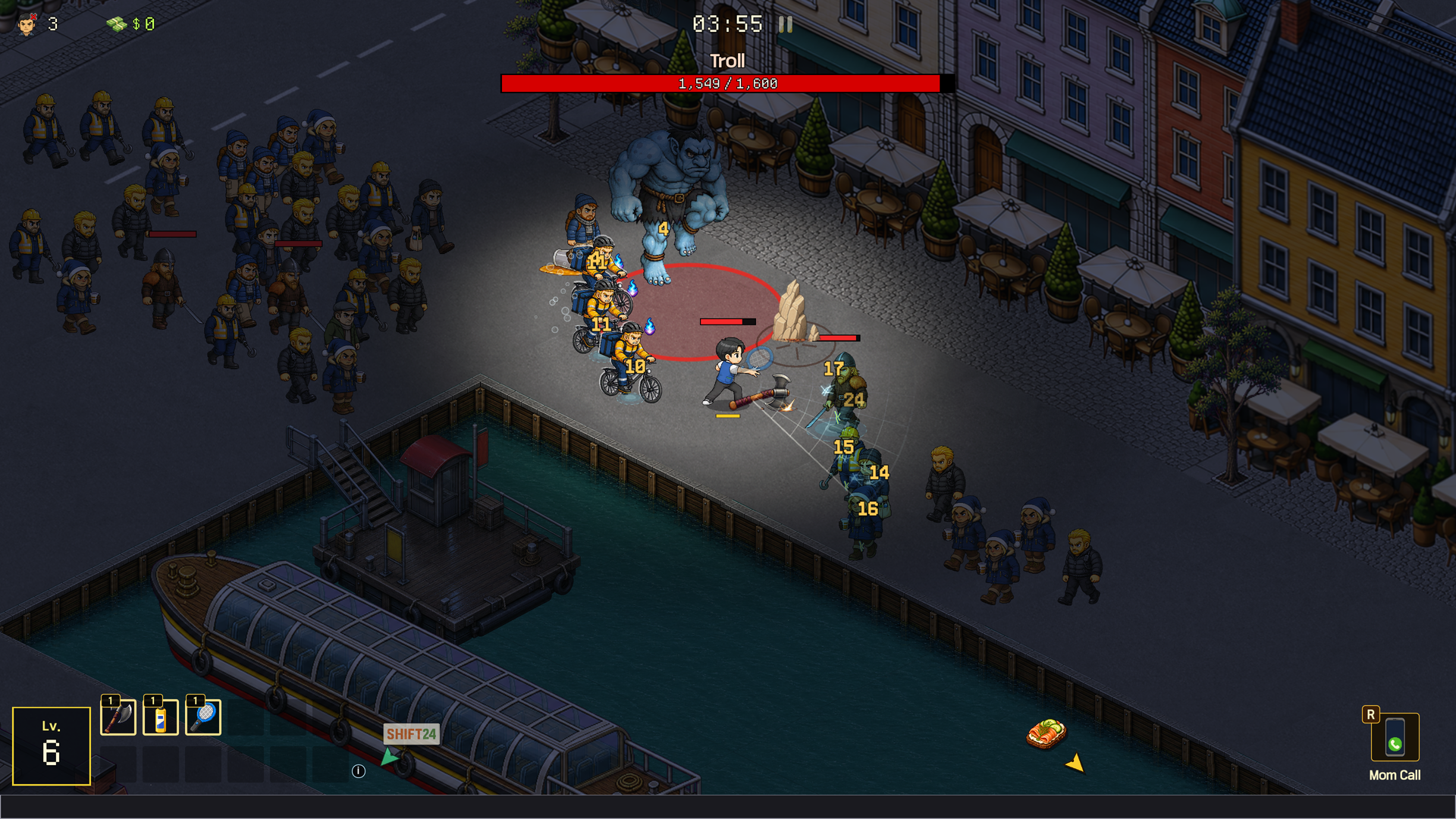
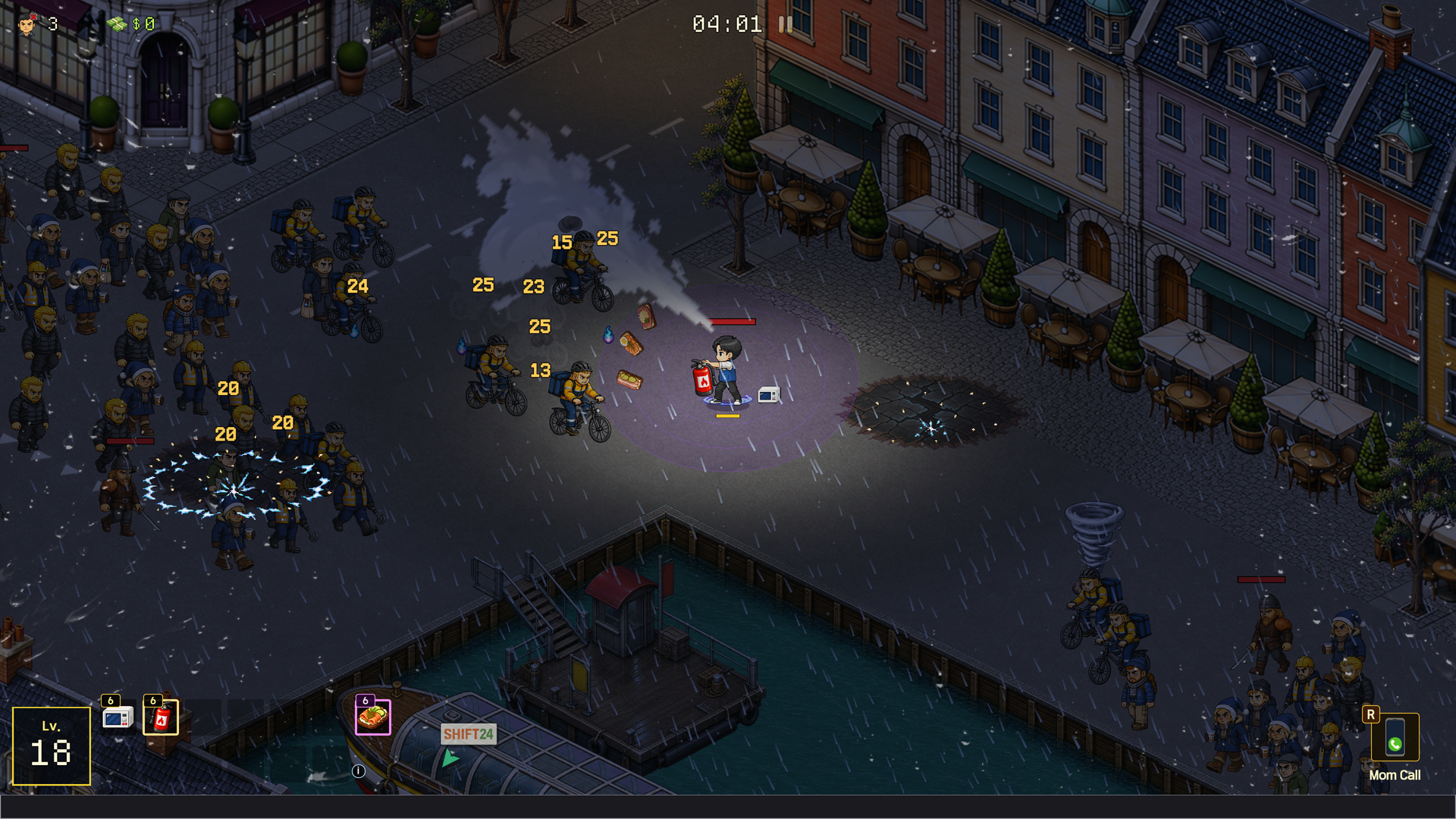
The Texas screenshots, for example, place combat near parked vehicles and a brightly marked burger restaurant. The Sapporo images contrast a clearer street scene with one covered in snow. The Copenhagen pair places the action beside water and then under visibly stormy conditions. Those are concrete differences in the supplied material. They support discussion of visual identity, but do not establish that every branch has equal depth or that every environmental effect changes a hitbox, movement speed or damage calculation.
Weather is most interesting when it changes the information a player can trust. A crowded screen already asks the eye to separate danger from decoration. Snow, rain or other effects can create atmosphere, but they must remain compatible with reading an escape route. This is a particularly useful issue to test at the display size you intend to use. An effect that is attractive in a large screenshot may be harder to parse on a small laptop panel or a television viewed from across the room.

Reading the crowd matters as much as counting it
Large enemy numbers are easy to market. The more difficult achievement is making a dense scene understandable. The eye needs to locate the clerk, distinguish immediate threats from distant ones, and recognize where movement remains possible. Strong contrast, consistent effects and clear silhouettes can do more for the experience than adding another layer of particles. None of those qualities can be reduced to a total enemy count.
The official scenes show a compact character surrounded by groups that increasingly fill the street. Their usefulness to a reader is not proof of a frame rate. It is the chance to ask a visual question: can you still identify the active character and follow the direction of danger? The answer may differ between a still image and animation. It may also differ between normal play and a late encounter when several effects overlap.

The demo is a comparison tool, not the whole product
A free Seoul demo provides a practical way to test the movement, presentation and basic loop before paying. It cannot prove that the full branch sequence remains engaging or that later story outcomes reward the player's time. Its value lies in answering the first layer of questions: do the inputs feel comfortable, can you read the action, and do you want to attempt another build after a failure?
The full game is single-player. Someone seeking an inexpensive co-operative game for friends should not infer multiplayer from the number of characters or enemies on screen. Likewise, availability on Windows and macOS is not a promise of console support. These are basic distinctions, but they prevent a common mismatch between an appealing trailer and the use a buyer actually has in mind.

Hardware numbers and the limits of a launch-day snapshot
The listed Windows minimum includes 8 GB of memory and graphics in the Intel UHD 620 or GeForce GTX 750 range; the recommended memory rises to 16 GB. The macOS listing specifies Monterey or later and a Metal-compatible graphics requirement, with 8 GB minimum memory. Storage is listed as 3 GB. These are developer-provided requirements, not benchmark results from Newjinmedia, and they do not establish a particular frame rate at a particular resolution.
The Steam page also discloses AI assistance in proofreading, coding and asset refinement, with developer review. That is a production disclosure, not a basis for pretending the supplied artwork was made through a different process. Nor does it tell us which exact visual details came from which tool. Readers who care about development methods can consider the disclosure alongside the actual game, without turning an incomplete description of a workflow into an unsupported allegation about the entire project.
A small launch with a clear question
Mini Mart Survivors has a stronger immediate identity than a premise built only around surviving larger waves. The night shift, the merchandise and the paycheck connect its fiction to things the player is asked to do. That connection is the reason this launch is worth noticing. It gives the action a recognizable setting and gives returning to work a possible meaning beyond accumulating another permanent upgrade.
The unresolved question is whether those connections remain interesting after several shifts. A game can have a memorable concept and still struggle with repetition; it can also use a modest scale to make every system feel closely related. The demo offers a low-commitment starting point, while the full release's branch progression and ending structure are the parts that require longer scrutiny. For now, the strongest case is an invitation to investigate a specific idea: what if the survival run were not an escape from everyday pressure, but an exaggerated version of earning enough to escape it?


Comments
Post a Comment