Endless Sky: Choose the Next Job Before the Next Ship

In Endless Sky, choose a ship around the jobs you can complete: cargo space, passenger bunks, fuel and operating costs all matter.
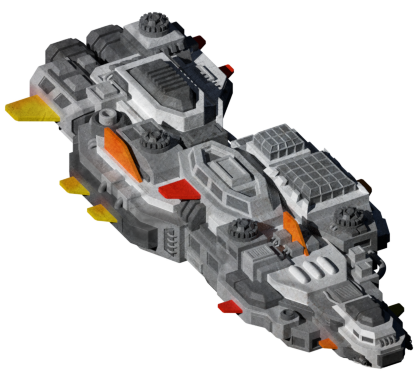
This guide compares ten human ship designs and the decisions around them using the project’s official stable release, v0.11.2, released June 27, 2026. It is reporting from the published game data, manual and interface implementation, not a claimed playtest. The illustrations are the project’s actual ship artwork, not screenshots of a session. Plugins, later releases and individual equipment changes can alter the situation on a player’s screen. A useful early ship lets you complete a useful journey without making the rest of your operation unworkable. A passenger cabin, a fuel tank and an engine compete for attention because they solve different problems. Buying capacity before deciding how to use it can leave a pilot with an impressive vessel and an unimpressive income.
The question running through the comparison is simple: what useful work becomes possible after the purchase? That work might be carrying a larger delivery, reaching a destination with fewer fuel stops, transporting more passengers or surviving a route that was previously too risky. A higher price is not an answer. Neither is a larger silhouette. The important change is the relationship between the ship, the assignment and the route.
Start with the job, not the showroom
Endless Sky combines trading, passenger transport, missions and combat in a two-dimensional spacefaring game. Its opening presents three different kinds of small vessel. That is more than a choice of appearance: the starting designs make different activities convenient. A pilot who enjoys reading destination lists and combining deliveries is not necessarily looking for the same ship as a pilot who wants to learn interception and weapon control.
A practical comparison begins with the job board and map. Look at where an assignment ends, how much cargo or passenger capacity it requires, whether it has a deadline, and what the journey asks of the fleet. Then consider the shipyard. Reversing that order encourages a common mistake: buying something first and trying to invent a reason for owning it afterward.
The examples below distinguish the hull’s data from the complete ship offered for sale. The cost field in the ship definition is not a reliable substitute for the final outfitted price shown by the game. Equipment contributes to the transaction, and a player can change it. Likewise, nominal cargo space is not a promise that every ton is available at the moment a mission is accepted. Existing cargo and mission commitments still matter.
A figure such as fuel capacity is also not a guaranteed number of destinations. Propulsion and route conditions determine how a reserve is used. Comparing two tank sizes can identify a design emphasis, but a sensible purchase still requires reading the installed drive and the actual route. These distinctions prevent a specification table from becoming an accidental promise about a particular save.
Shuttle: a small ship with more than one kind of work
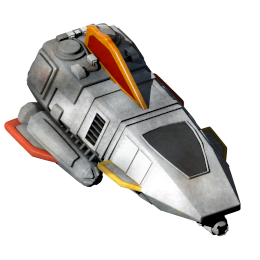
The Shuttle’s stable-release definition lists 20 tons of cargo space, six bunks and a requirement of one crew member. Its fuel capacity is 400. These are modest values, but they describe a different starting proposition from a vessel built mainly around a cargo hold. The passenger accommodation gives the pilot another kind of assignment to consider while learning the surrounding systems.
Bunks should not be read as an unconditional number of paying passengers. Crew occupy accommodation too, and the current ship panel is the place to check the space actually available. This is why a job that looks small on the destination list can still be unavailable. The relevant question is not how many bunks the model originally had, but how many usable places remain after the ship’s current obligations.
The weapon capacity in the data is only 10, against 120 total outfit capacity. Those are separate constraints, not two pockets that can simply be added together. Turning this transport into a combat project changes the question entirely: the pilot must ask what is being sacrificed and whether the result still serves the original job. An available mounting point is not a recommendation to fill it.

Star Barge: volume is useful only when it earns its passage
The Star Barge has 50 tons of cargo capacity, compared with the Shuttle’s 20. Its three bunks and one required crew member point toward a more freight-centered use. The contrast makes it a useful lesson in specialization. It provides more room for goods, but that room does not choose a profitable commodity, a manageable route or a safe destination on the pilot’s behalf.
Trading also ties up money before the sale. Filling an empty hold is not automatically the right move if the purchase leaves too little cash for the rest of the operation. A pilot can compare the margin on the goods with the time and risk needed to deliver them. The larger hold multiplies a good opportunity, but it can also multiply the amount of capital committed to an uncertain one.
A simple hypothetical shows the difference between cargo and earnings. Suppose a trade yields 100 credits per ton before other costs. Twenty tons would produce 2,000 credits of trading margin, while 50 tons would produce 5,000. Those figures are arithmetic examples, not quoted game prices or a recommended route. If the larger trip takes longer or adds trouble, the extra 3,000 does not by itself establish which choice was better.
The Star Barge’s stock equipment includes an anti-missile turret. That matters because defensive equipment is not interchangeable with forward-firing weapons. A trader is trying to keep a journey viable, not necessarily win a battle. The relevant upgrade may be one that preserves the chance to leave, rather than one that encourages the pilot to remain in a fight.

Sparrow and Fury: combat capability changes the business
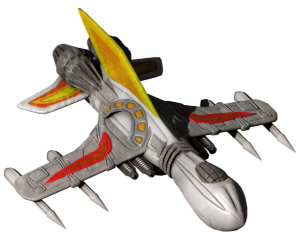
The Sparrow is classified as an interceptor. The data gives it 15 tons of cargo space, three bunks and two Beam Lasers in the stock outfit list. Its role is not a more expensive version of the Star Barge’s role. Choosing it means accepting that the ship’s useful strengths sit elsewhere, while routine hauling capacity remains limited.

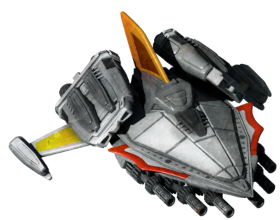
The Fury offers another point of comparison. Its hull definition has 15 tons of cargo, three bunks and one required crew member, like the Sparrow on those measures, while fuel capacity is 600 rather than 300. Its outfit capacity is 160 rather than 130. An improvement in one role therefore need not create a new commercial role. More room for equipment does not automatically become more room for freight.
That distinction helps when considering the next purchase. If the existing problem is that delivery jobs will not fit, moving between two small combat-oriented ships may leave the problem intact. If the problem is instead the equipment budget or reach of the current combat vessel, the comparison becomes more relevant. The correct upgrade is the one that answers the actual limitation, not the next item in a price-sorted list.

Scout: a longer reach can be a form of capacity
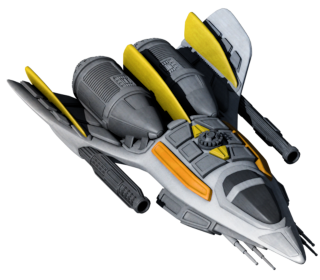
The Scout’s data lists 800 fuel capacity, 55 tons of cargo space, 12 bunks and one required crew member. Its stock equipment includes a ramscoop. This is a substantially different arrangement from choosing a ship solely for the largest hold. The design gives the pilot reasons to examine route flexibility and passenger work alongside cargo.
Fuel planning changes the shape of a journey. A destination may be close in straight-line distance yet inconvenient through the available connections. A route with suitable landing opportunities can be more practical than one that looks short but leaves little margin. The map is therefore part of the purchase decision, not merely the screen used after the purchase has already been made.
A ramscoop should not be treated as an unlimited, instant refill button. The relevant behavior is defined by the equipment and the environment, and the route still needs attention. The useful idea is that a ship can reduce dependence on a particular pattern of stops without eliminating the need to plan. The equipment changes the options; it does not abolish constraints.
For a pilot whose assignments repeatedly involve distant destinations, that kind of flexibility may be more useful than another increment of cargo volume. For a pilot running a familiar short freight route, it may be less valuable. The same specification can be an advantage in one pattern of play and unused capacity in another.

Clipper and Argosy: versatility has several separate limits
The Clipper provides 70 tons of cargo capacity, nine bunks and a crew requirement of three. Its outfit space is 260, with weapon and engine capacities of 60 and 80. Those figures describe a vessel with room to make choices, but they also show why the choices must be checked together. A large overall equipment allowance does not erase the more specific limits inside it.

The Argosy moves to 120 tons of cargo, 14 bunks and four required crew. Its total outfit space is 270, only slightly above the Clipper’s 260, while weapon capacity rises to 90 and engine capacity remains 80. The comparison is useful precisely because it is not a uniform enlargement. Cargo, accommodation, staffing and equipment budgets change by different amounts.
Before buying, write down the task the new ship must perform with its actual load. If the assignment needs more cargo room, compare the usable hold. If the problem is passenger accommodation, compare the remaining bunks. If the goal is a particular equipment combination, check its mass, energy and heat demands against the ship’s limits. One broad label such as “versatile” cannot replace these separate tests.

Freighter: the hold is not the whole operating picture
The Freighter’s definition lists 150 tons of cargo, seven bunks and two required crew members. Its stock equipment includes a Scram Drive, two Blaster Turrets and a Heavy Anti-Missile Turret. Those details matter alongside the hold because the ship must travel and defend itself as an integrated system. Cargo capacity is only one part of that system.
The official description emphasizes its handling limitations. This is not an invitation to attach an invented travel-time penalty to every route; it is a reason to inspect propulsion and think about the practical sequence of arrivals and departures. A large delivery that is awkward to complete may be less attractive than its headline payment suggests.
The ship’s turret-centered stock armament also illustrates why equipment should be understood by function. A weapon arrangement that can engage without pointing the entire vessel toward a target serves a different need from a small interceptor’s forward guns. Copying an outfit plan between the two ships without considering their roles can solve the wrong problem.

Blackbird and Mule: two kinds of expansion
The Blackbird has 28 bunks, three required crew members and 60 tons of cargo capacity in the stable-release definition. Its accommodation makes it a useful contrast with the Freighter. A pilot trying to increase passenger work should not assume that the ship with the larger cargo number is also the better transport for people.

The Mule goes in a different direction. It lists 170 tons of cargo, 43 bunks and 14 required crew, as well as a fighter bay. Its total outfit capacity is 440. These figures describe a broad capability, but the larger staffing requirement is part of the package. Counting every bunk as saleable passenger space would overstate what the ship can offer.
The fighter bay is another example of capacity that is not the same as a completed capability. The manual explains that carrier bays do not come with fighters or drones automatically supplied. Purchasing and operating the carried craft is a separate decision. An empty bay may be useful future potential, but it should not be counted as present combat strength.

Read the account as carefully as the cargo hold
The game’s account logic distinguishes crew salaries, maintenance and mortgage payments. In the stable implementation, salaries are handled before maintenance, with mortgage processing following them. Unpaid obligations are not simply forgotten. A ship purchase therefore changes more than the balance at the moment of sale; it can change the recurring demands placed on that balance.
Trading margin is also a narrower idea than overall operating profit. The trading panel tracks the relationship between sale proceeds and the recorded basis of the goods. That is useful information about the commodity transaction. It is not a complete report of every expense and consequence attached to the journey that delivered the goods.
A fleet purchase is a distribution decision
Keeping the old ship as an escort creates a different situation from selling it to fund a replacement. The manual explains that ships can be reordered to select the flagship. The fleet is not just one larger invisible cargo hold: individual vessels can be exposed to danger, and losing an escort can also mean losing what it was carrying.
That makes a fleet expansion a question of distribution. Which ship carries the important cargo? Which vessel is expected to survive the route? Does the new arrangement require more management than the player wants? A collection of inexpensive ships may offer attractive total capacity, but the consequences of losing one ship are not captured by the total alone.
The strongest upgrade is the one you can explain
Before confirming a purchase, finish one sentence: “This ship lets me do this job better because…” A good answer names a concrete change—usable cargo, passenger accommodation, route flexibility, equipment room or a suitable combat role. “It costs more” and “it looks stronger” do not explain how the next journey improves.
Then check the actual sale screen, current outfits, available cash and remaining commitments. The values in this guide are reference points from a specific stable release, not replacements for the ship in front of you. If that ship differs, investigate the version, equipment or plugin rather than forcing the numbers to agree.
Endless Sky’s appeal is that a vessel can become part of a personal story: a first transport, a dependable freighter, an explorer or a hard-earned flagship. The most satisfying purchase is often the one that changes what the player can meaningfully attempt. Choose that attempt first. Let the ship follow.



Comments
Post a Comment